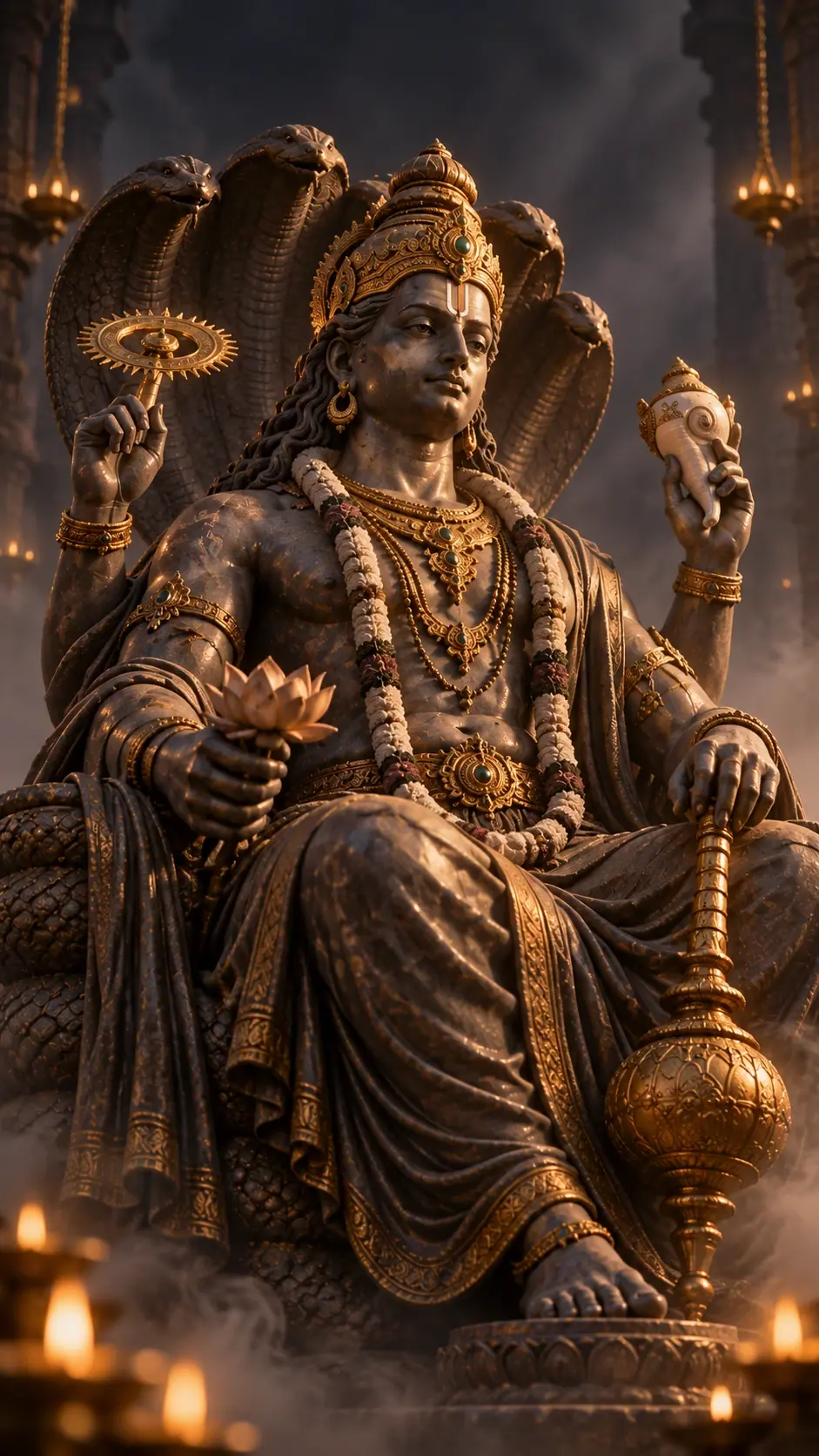
Peaceful in form, resting on the serpent, the lotus rising from his navel, lord of the gods; support of the universe, vast as the sky, cloud-dark and beautiful; beloved of Lakshmi, lotus-eyed, reached by yogis in meditation. I bow to Vishnu, who takes away the fear of this world, the one lord of every realm.
Vishnu Dhyana Shloka, recited before Vishnu Sahasranama
The verse that fixes the image in the mind before the thousand names are recited.
Om Narayanaya vidmahe Vasudevaya dhimahi |
tanno Vishnuh prachodayat ||
May we know Narayana, may we meditate on Vasudeva. May Vishnu set us in motion.
Vishnu Gayatri
Travelling the Vaishnava Path
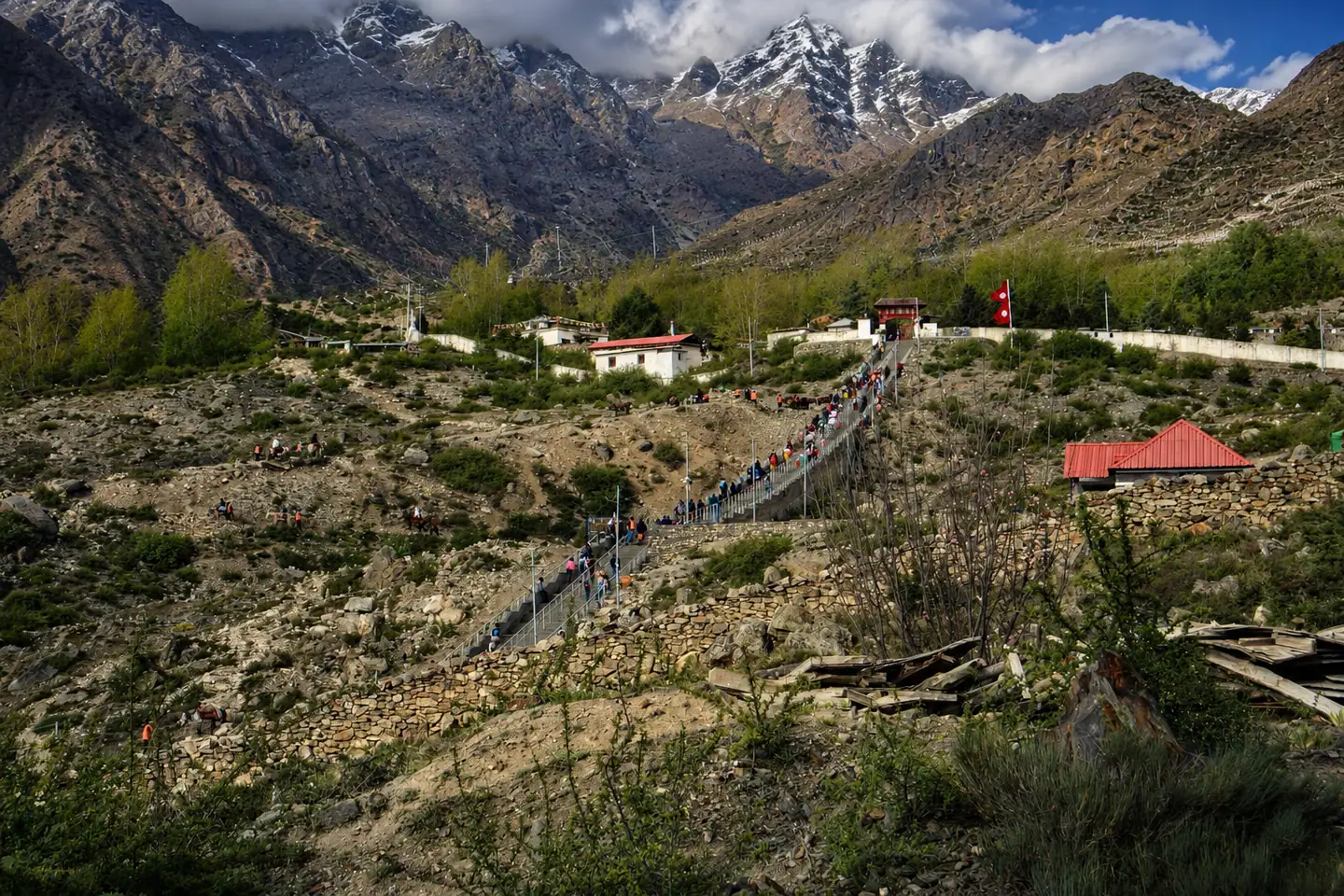
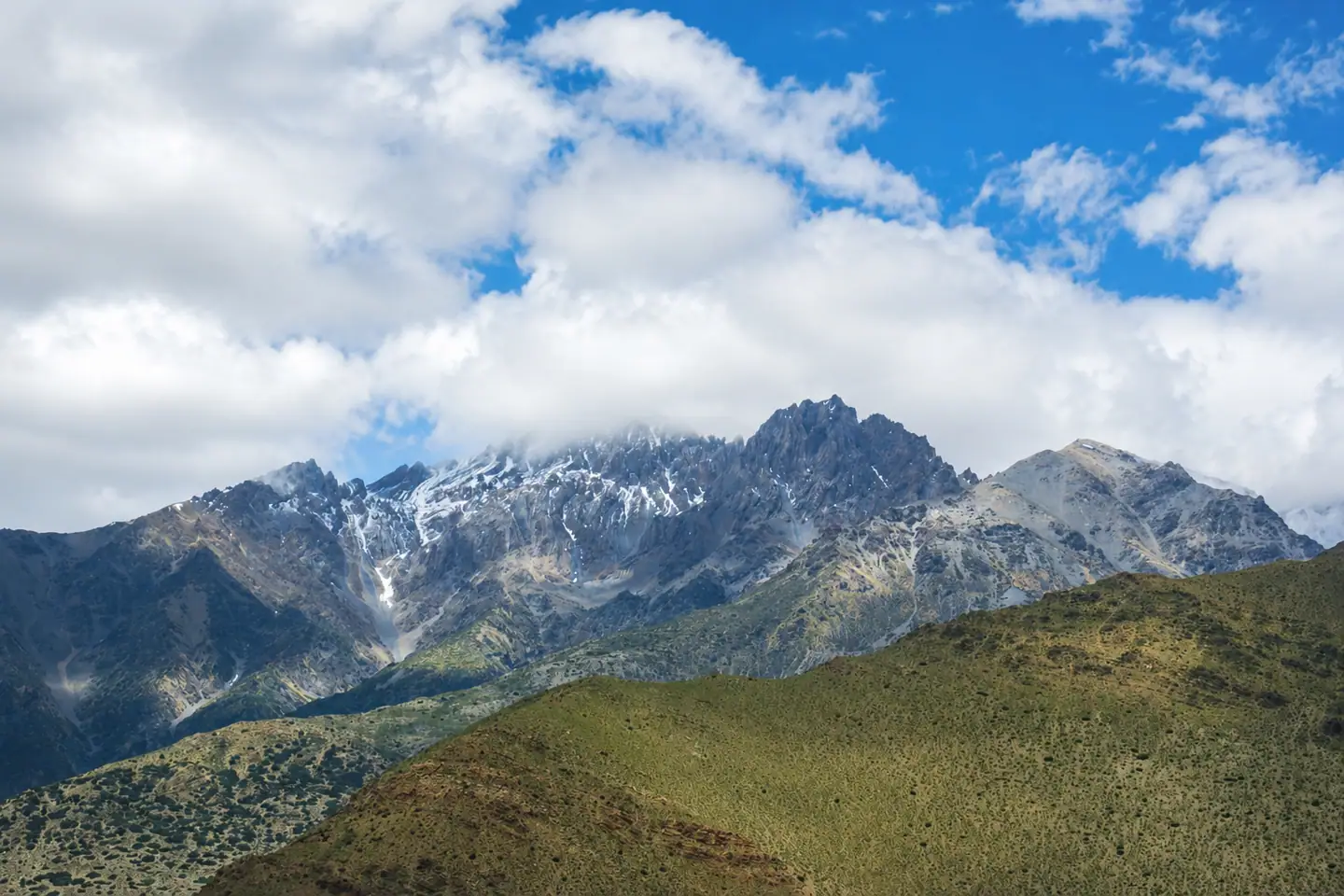
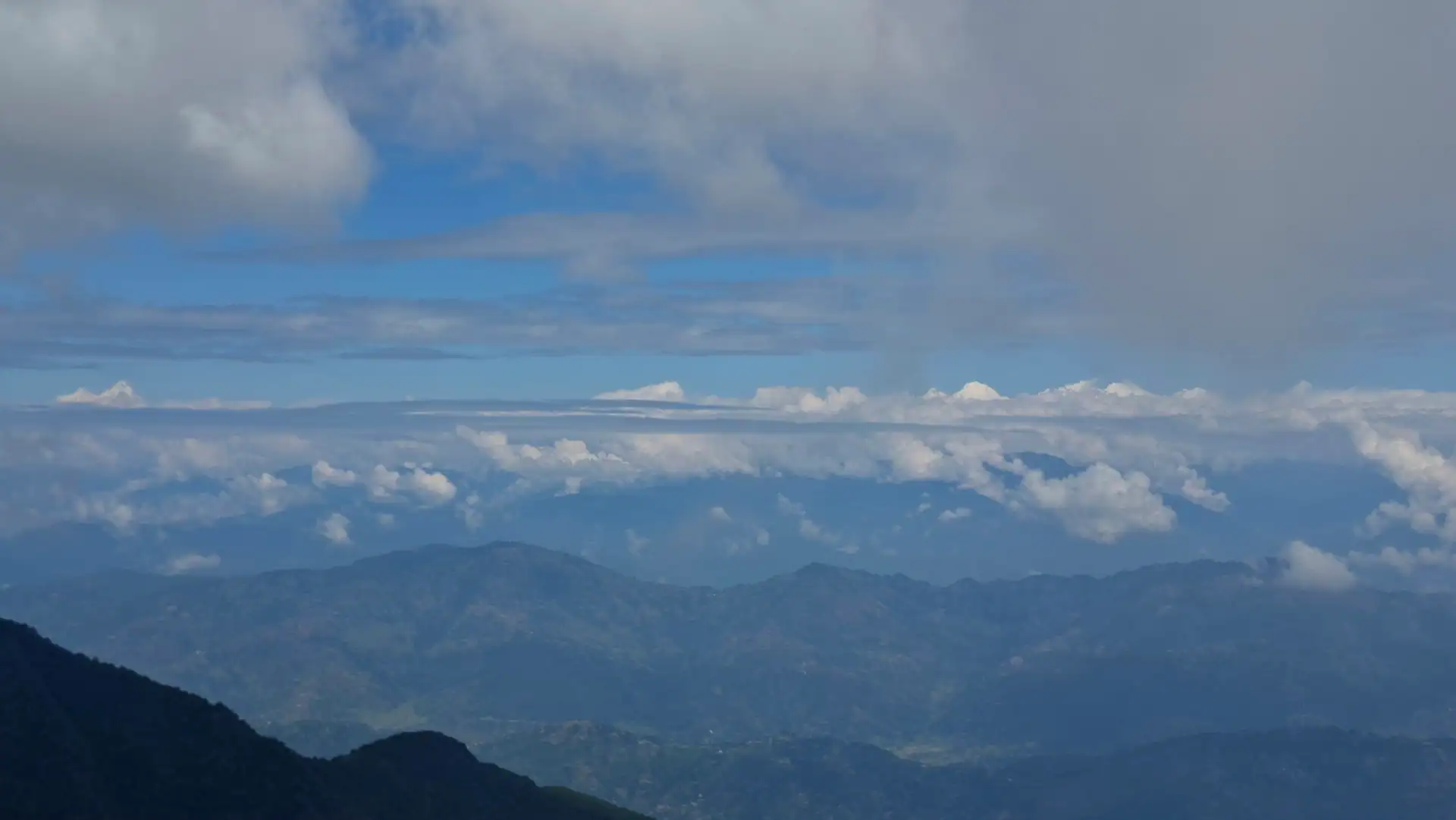
Muktinath is the centre of the Vaishnava route through Nepal. It sits at 3,710 metres in Mustang, behind the Annapurna range and inside its rain shadow, which is why the landscape turns from forest to high desert on the way up. It is one of the 108 Divya Desams, and it is sacred to Buddhists as Chumig Gyatsa in the same breath.
When is the best time to visit Muktinath?
March to June and September to November are the reliable windows. Muktinath is in the rain shadow, so the monsoon matters less there than on the flight in, and it is the Pokhara to Jomsom leg that gets cancelled.
The temple stays open through winter, but December to February is bitter and the road can close with snow. Rishi Panchami and Janai Purnima, in August and September, draw the largest crowds of pilgrims.
How do you get to Muktinath?
Most journeys fly Pokhara to Jomsom early in the morning, then drive or walk the last stretch to Ranipauwa below the temple. The Kali Gandaki wind gets up around eleven, so flights are scheduled at dawn and cancelled rather than flown late.
The road from Beni is now driveable the whole way and is the fallback when flights do not go. It is a long day on a rough surface, and a jeep is more comfortable than a bus by a wide margin.
Helicopter charters reach Muktinath directly from Kathmandu or Pokhara and are the usual answer for pilgrims who cannot manage the walk or the altitude gain.
What are the rites at Muktinath?
The 108 water spouts behind the temple are fed from the Gandaki and are bathed under in sequence, spout by spout, however cold. Pilgrims then bathe in the two kunda in front of the temple.
Jwala Mai, the small shrine beside the temple, holds a natural gas flame burning over water. It is the reason the site is counted as a place where all five elements are visible at once.
Shaligram, the black ammonite fossils found in the Kali Gandaki, are treated as aniconic forms of Vishnu. Taking them out of Nepal is restricted, so buy nothing you have not asked about.
How should I pace the altitude at Muktinath?
Muktinath is high enough to affect people, especially those who fly in from Kathmandu at 1,300 metres and reach 3,710 metres the same morning. A helicopter darshan that lands, waits and leaves keeps the exposure short, which is part of why it is offered.
If you are walking, the gain from Jomsom is manageable in a day for most people, but it is worth a night at Kagbeni or Jharkot rather than pushing straight up.
What should I pack for Muktinath?
A towel and a change of clothes for the spouts. Mustang is cold in the mornings whatever the season, and the water comes off the mountain.
Sun protection matters more here than the temperature suggests. The valley is bright, dry and dusty, and a scarf for the afternoon wind is worth more than a jacket.