
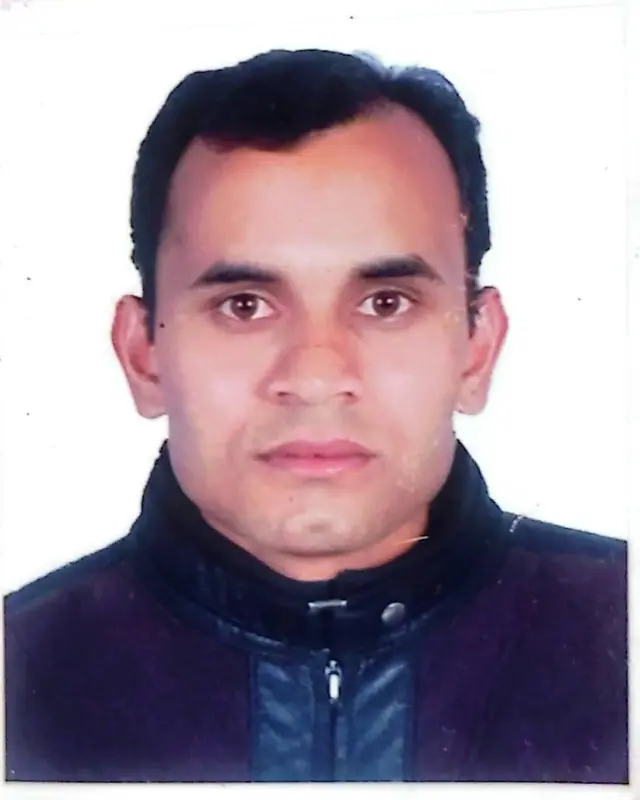
Bhimsen Banjara
Senior Trekking Guide
Bhimsen Banjara was born in Gorkha and grew up in sight of the mountains he now guides in. He has worked in trekking since 2000 and has been a qualified guide since 2007.
Five days to eastern Nepal and back, most of it on the road, for the sake of three caves in a limestone hill that people have been walking into for longer than anyone can date. Shiva is said to have hidden in the first of them.
Journey at a Glance
Package Cost
USD440
per person
(Group of 6 or more)
Last updated
The Sacred Cave
Halesi Mahadev sits in the Khotang hills of eastern Nepal, about 220 km from Kathmandu by road, a limestone formation with three chambers that have been places of worship for centuries. It is often called the Pashupatinath of the east.
The story told there is of Bhasmasura, who was granted the power to burn anything he touched and then went after Shiva. Shiva hid in the cave. Two of the other chambers carry their own stories, one of Bhairav and one of a cow that is said to have given milk over a stone lingam. Buddhists know the same caves as Maratika, a meditation seat of Padmasambhava, and both traditions still use them.
Shaiva and Buddhist, in the same three chambers
“People come out of that cave quieter than they went in.”
Overview
There is no way to pretend otherwise. Halesi is a long way from Kathmandu and you spend two of the five days driving to it and one driving back.
We have built the trip around that rather than against it. The drive heads east along the BP Highway for the first stretch, there are stops that are worth making, and the vehicle is where a good deal of the talking gets done. A night at Dhulikhel breaks the journey and puts you somewhere with a view of the range at sunset.
The darshan at Halesi is at four in the morning, before anyone else is about.
Read the full story5 DaysFive days, four nights
| Day | Route | Overnight | Travel |
|---|---|---|---|
| Day 01 | Arrival in Kathmandu | Kathmandu | Airport pickup |
| Day 02 | Morning darshan, then Dhulikhel | Dhulikhel | By road, east from Kathmandu |
| Day 03 | Dhulikhel to Halesi | Halesi | Seven or eight hours by road |
| Day 04 | Halesi darshan, then back to Kathmandu | Kathmandu | Seven or eight hours by road |
| Day 05 | Departure | Departure | Airport transfer |
Airport pickup and hotel, time to wash and rest, then Pashupatinath in the evening for the arati if your flight allows it. Tilaka and a rudraksha bead.
Up at 4:30 for practice at Pashupatinath and the morning abhisheka, where you are given your mantra. After breakfast the drive east, with silent stretches and stops along the way. Dhulikhel by evening, in time for the sunset over the range, and the Kali temple and view tower above the town.
Away by half past seven for seven or eight hours through Nepalthok, Khurkot and Ghurmi, with lunch on the road. You arrive at Halesi in the evening with enough light for a first walk around the temple grounds, barefoot on the stone.
Four in the morning for the darshan, through the Mahadev cave, the Bhairav cave and the Cow cave while it is still dark and quiet. Breakfast, then the drive back, seven or eight hours. If you missed the arati on the first evening we go to Pashupatinath tonight to close the circle.
Airport drop to suit your flight, and a blessing before you go.
Before you book
The Halesi Mahadev Darshan costs USD 605 per person for 2 to 5 pilgrims and USD 440 for 6 or more. A single pilgrim is quoted on request.
Halesi Mahadev is a limestone cave complex in the Khotang hills of eastern Nepal, often called the Pashupatinath of the east. Hindus hold that Shiva hid there from the demon Bhasmasura, and Buddhists know the same caves as Maratika, a meditation seat of Padmasambhava. Its three chambers are the Mahadev, Bhairav and Cow caves.
The Halesi Mahadev Darshan goes by road. It drives east to Dhulikhel on day 2, then seven or eight hours on day 3 through Nepalthok, Khurkot and Ghurmi to Halesi, and seven or eight hours back to Kathmandu on day 4.
Halesi Mahadev is about 220 km from Kathmandu by road, through Dhulikhel, Khurkot and Ghurmi. The drive takes seven or eight hours, and the Halesi Mahadev Darshan breaks it with a night at Dhulikhel on the way out.
The Halesi Mahadev Darshan is 5 days and 4 nights, starting and ending in Kathmandu, with a night at Dhulikhel on the way out and a night at Halesi.
On the Halesi Mahadev Darshan the darshan is at four in the morning on day 4, through the Mahadev, Bhairav and Cow caves while it is still dark and quiet.
The best season for the Halesi Mahadev Darshan is October to April. Monsoon landslides make June to September the least reliable time on the road to Halesi.
The Halesi Mahadev Darshan is graded easy. What it asks of you is the road: two of the five days are spent driving to Halesi and one driving back.
The Halesi Mahadev Darshan includes private transport with airport pickup and drop, hotels throughout, three vegetarian meals a day, temple entry permissions and priest arrangements, Acharya-led spiritual guidance, a medical kit with altitude medication and 24/7 emergency support. International flights and the Nepal visa fee are not included.
As of October 2026 the Pashupati Area Development Trust publishes puja rates in Nepalese rupees, from NPR 2,100 (about USD 14) for a Panchamrit Puja and NPR 7,500 (about USD 49) for Panchamrit with Rudrabhishek and Balbhog to NPR 2,500,000 for the eleven-day Atirudri. Pujas are paid at these rates unless your journey already includes one. Mondays, the Mondays of Shrawan in July and August, and Maha Shivaratri in February or March are the most auspicious and most crowded days.
Sama Yatra takes a 30% deposit to confirm a booking for the Halesi Mahadev Darshan. Bookings cannot be cancelled, but the journey can be postponed for up to two years at the same cost.
The first reflections are still being written.
We publish what travellers tell us in their own words, once they have travelled. Nothing here is borrowed or invented.
Senior Trekking Guide
Bhimsen Banjara was born in Gorkha and grew up in sight of the mountains he now guides in. He has worked in trekking since 2000 and has been a qualified guide since 2007.
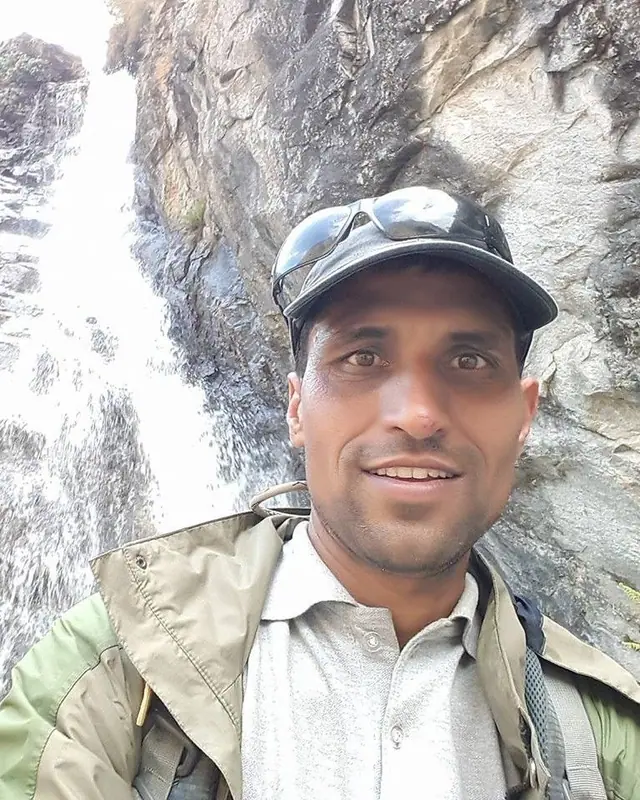
Senior Guide
Tika Dhakal started in 1999 as a porter and assistant trekking guide and is now a fully licensed trekking guide. He leads treks in the Himalaya and tours of Nepal's cultural cities, and has guided travellers from all over the world.
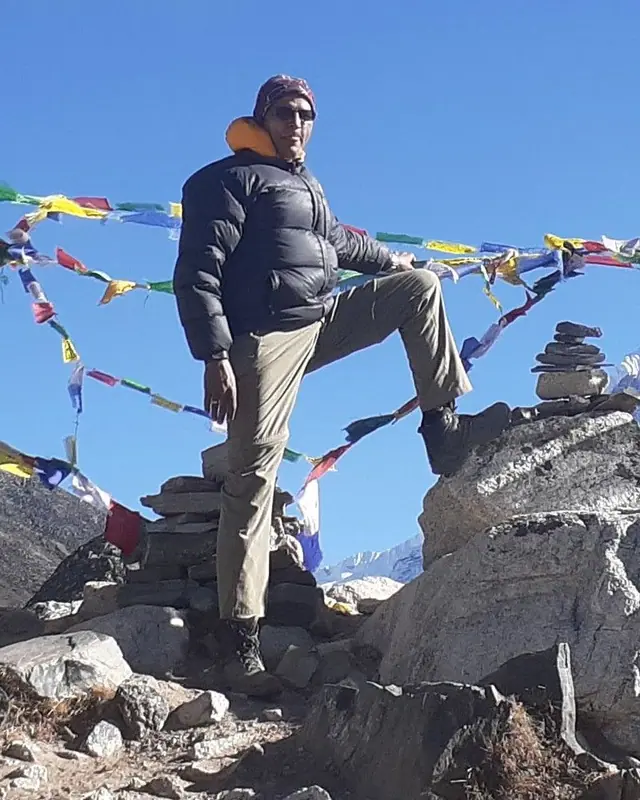
Trekking Guide
Prem Bastakoti, from Gorkha district, is a trained, government licensed trekking guide with a long record in the trekking trade and letters of appreciation from his guests. Years of guiding Russian travellers have given him some Russian.
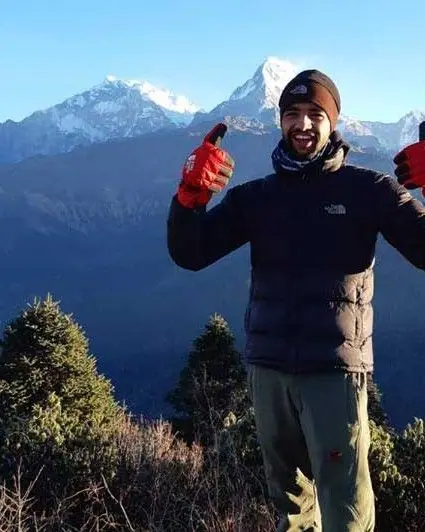
Trekking Guide
Tara Nath Bhatta is one of the younger guides on the team. He has guided for a few years, makes sure every guest is comfortable with his guidance, and has been thanked by many of them.
Trekking Guide
Hem Prasad Banjara was born in Gorkha district, in the Manaslu region, and has more than 15 years of guiding behind him. He speaks Korean fluently and has guided many Korean travellers.