Sama Yatra
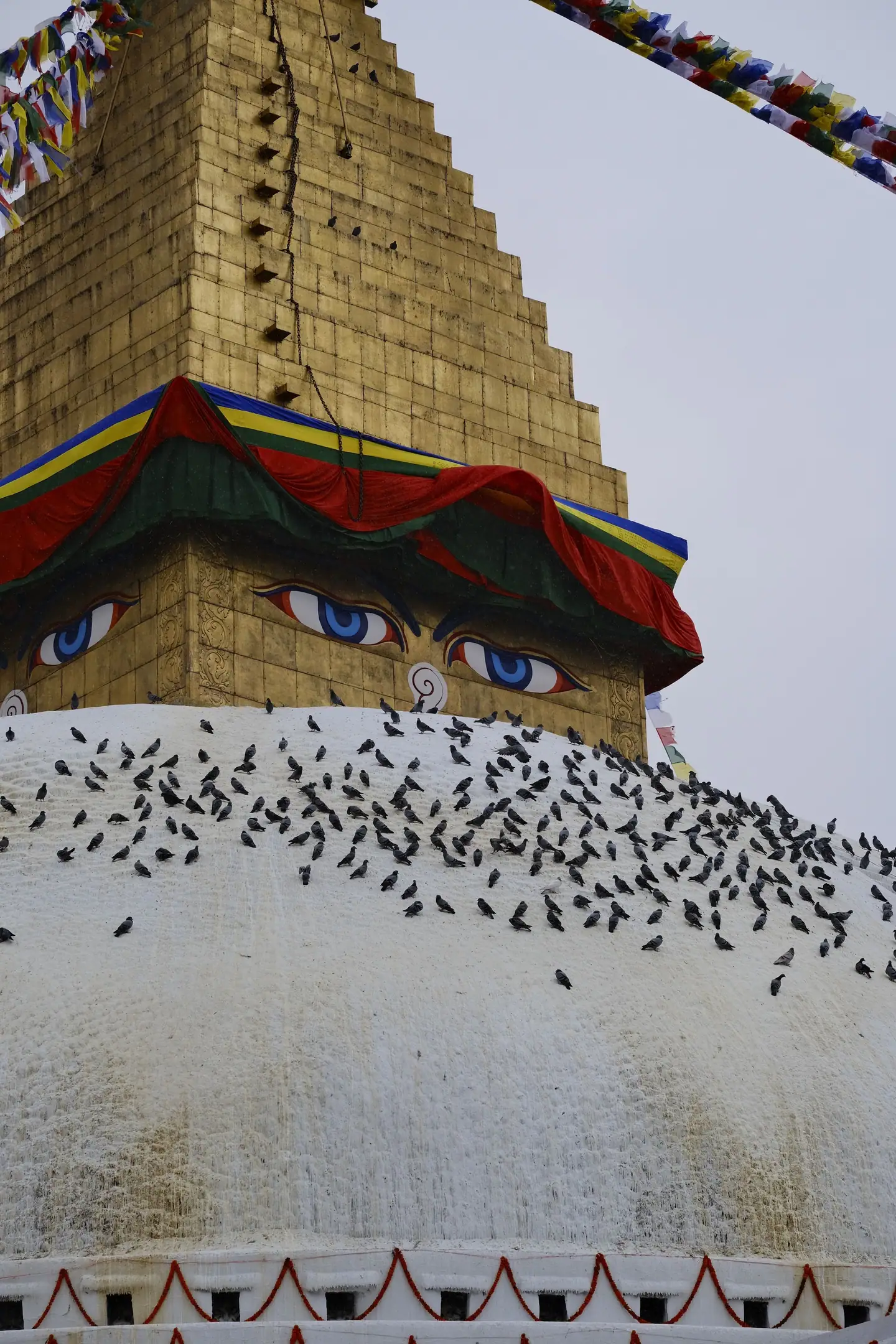
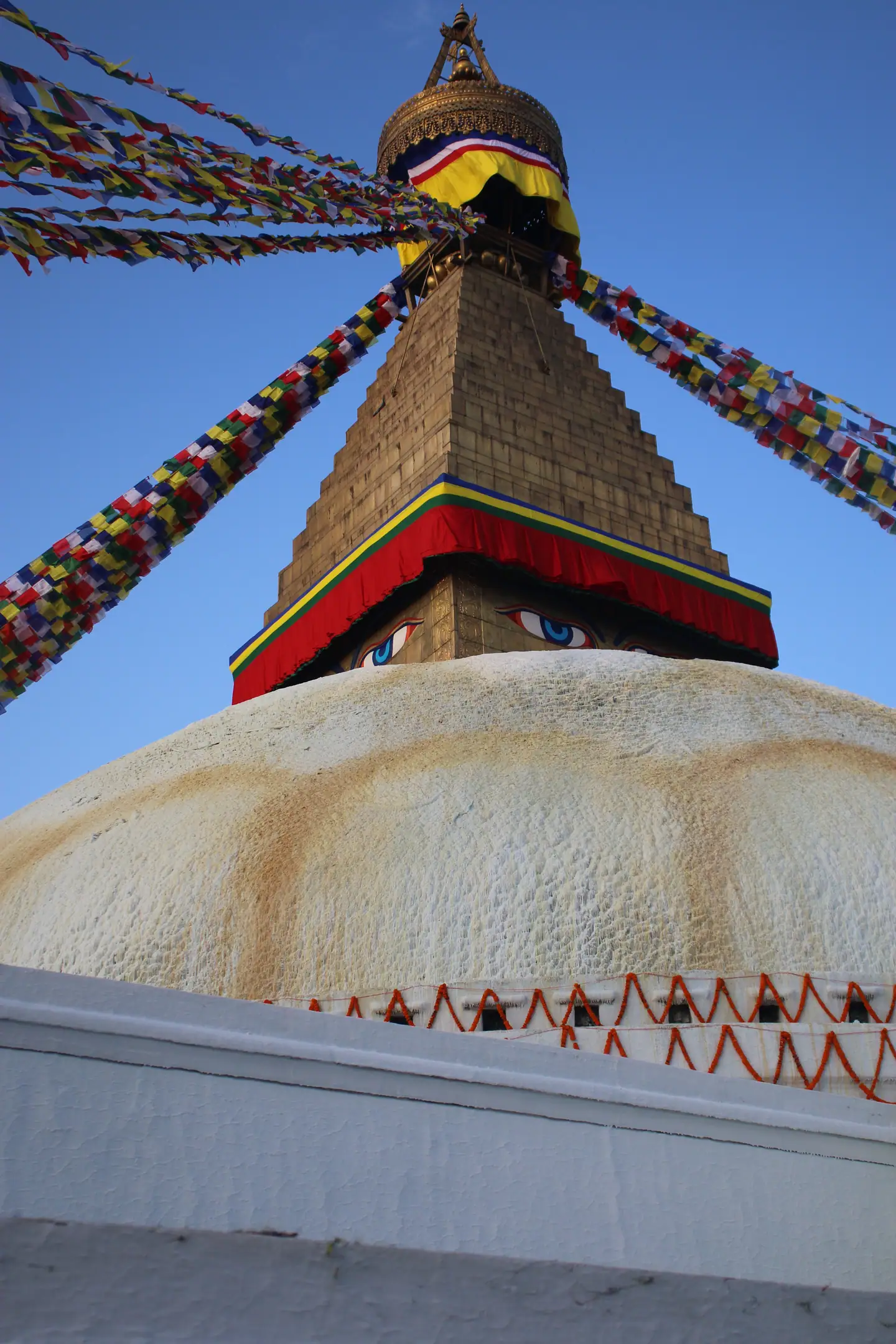
The painted Buddha eyes on the gilded tower of Boudhanath Stupa beneath a draped red cloth, the white dome curving below and prayer flags strung above

Sacred Buddhist Journey of the Kathmandu ValleyThree Stupas, and Time to Sit With Them

The Kathmandu Buddhist Journey is a 5-day pilgrimage to the three great Buddhist places of the Kathmandu Valley: Swayambhunath on its hill, Namo Buddha on its ridge to the east, and the great stupa of Boudhanath. An English-speaking spiritual guide explains what you are seeing, and each day leaves time for meditation, prayer and quiet reflection.

Journey at a Glance

Duration
5 Days4 nights in Kathmandu
Difficulty
EasySightseeing and short walks
Best Season
All yearOn the dates you choose
Group Size
2 or moreRates fall at 6, 12 and 21
Start and End
KathmanduAirport pickup and drop

Package Cost

USD800

per person

(5 days, group of 21 or more, twin sharing)

2 to 5 travellers
$1,000
6 to 11 travellers
$900
12 to 20 travellers
$850
21 and above
$800

Last updated

Overview

What is the Kathmandu Buddhist Journey?

The Kathmandu Buddhist Journey is a 5-day pilgrimage for people who want to understand Buddhism as well as see it. It visits Swayambhunath, Namo Buddha and Boudhanath, and an English-speaking spiritual guide explains why pilgrims walk clockwise round a stupa, light butter lamps and recite prayers. No knowledge of Buddhism is needed, and devoted pilgrims and respectful learners travel together.

Swayambhunath is a hilltop stupa about 3 km west of central Kathmandu, and UNESCO identifies it as the oldest Buddhist monument in the Kathmandu Valley. The day there includes an introductory session in meditation or Buddhist teaching at a monastery nearby, led by a monk or qualified teacher where the monastery confirms it in advance.

Namo Buddha stands on a forested ridge in Kavrepalanchok district, about 40 km east of Kathmandu at about 1,750 metres. By Buddhist tradition it is where the Buddha, in an earlier life as Prince Mahasattva, gave his own body to feed a starving tigress and her cubs, the story Buddhists tell to teach compassion and generosity. Thrangu Tashi Yangtse Monastery, built by Khenchen Thrangu Rinpoche, stands beside the old stupa.

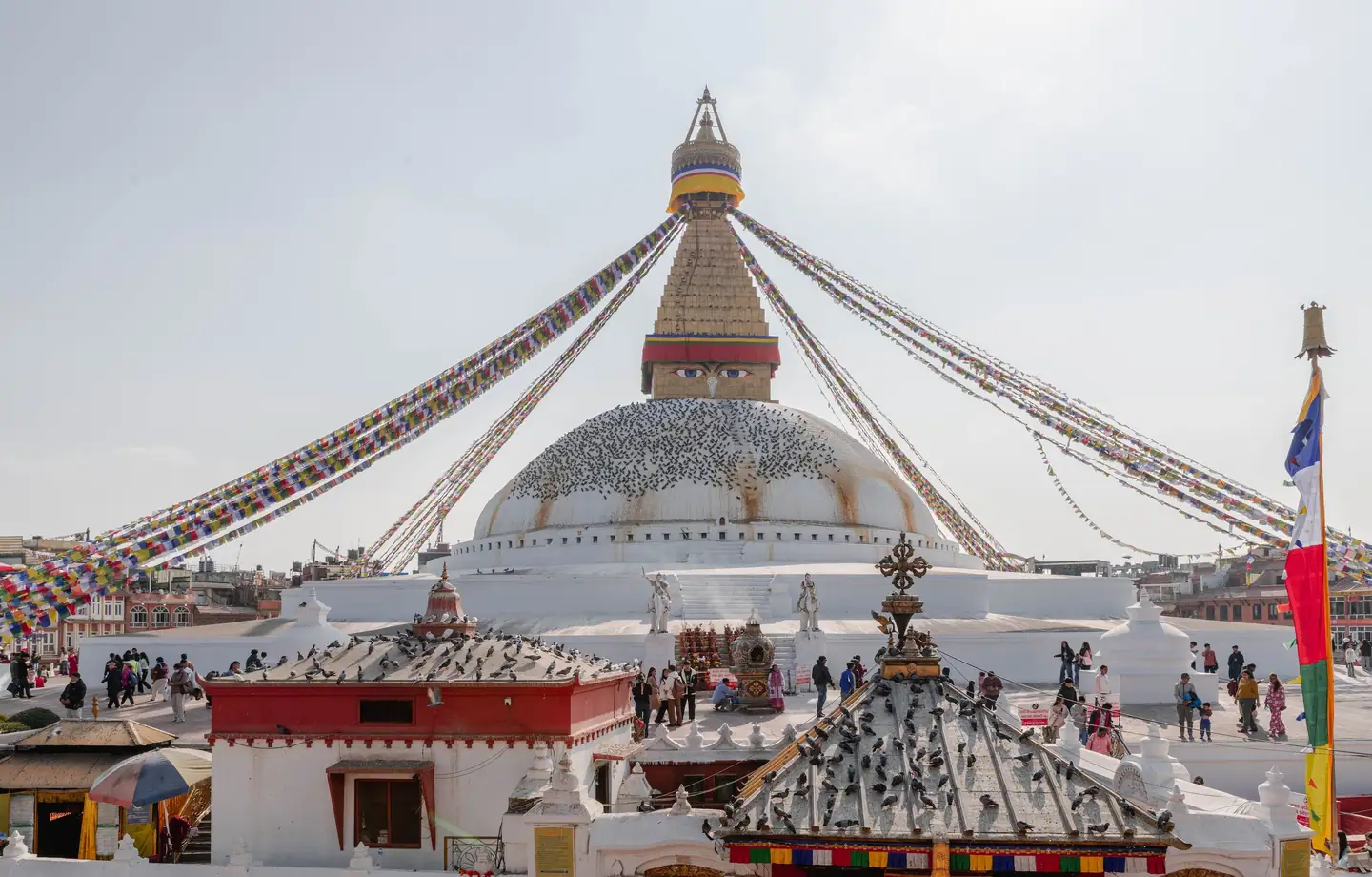
Boudhanath, about 8 km east of central Kathmandu, is the largest stupa in Nepal by UNESCO’s description and a centre of Tibetan Buddhist life, ringed by monasteries. The journey spends a day there, returns in the evening, and on the last morning observes a scheduled prayer ceremony in the Boudha area where a monastery permits it.

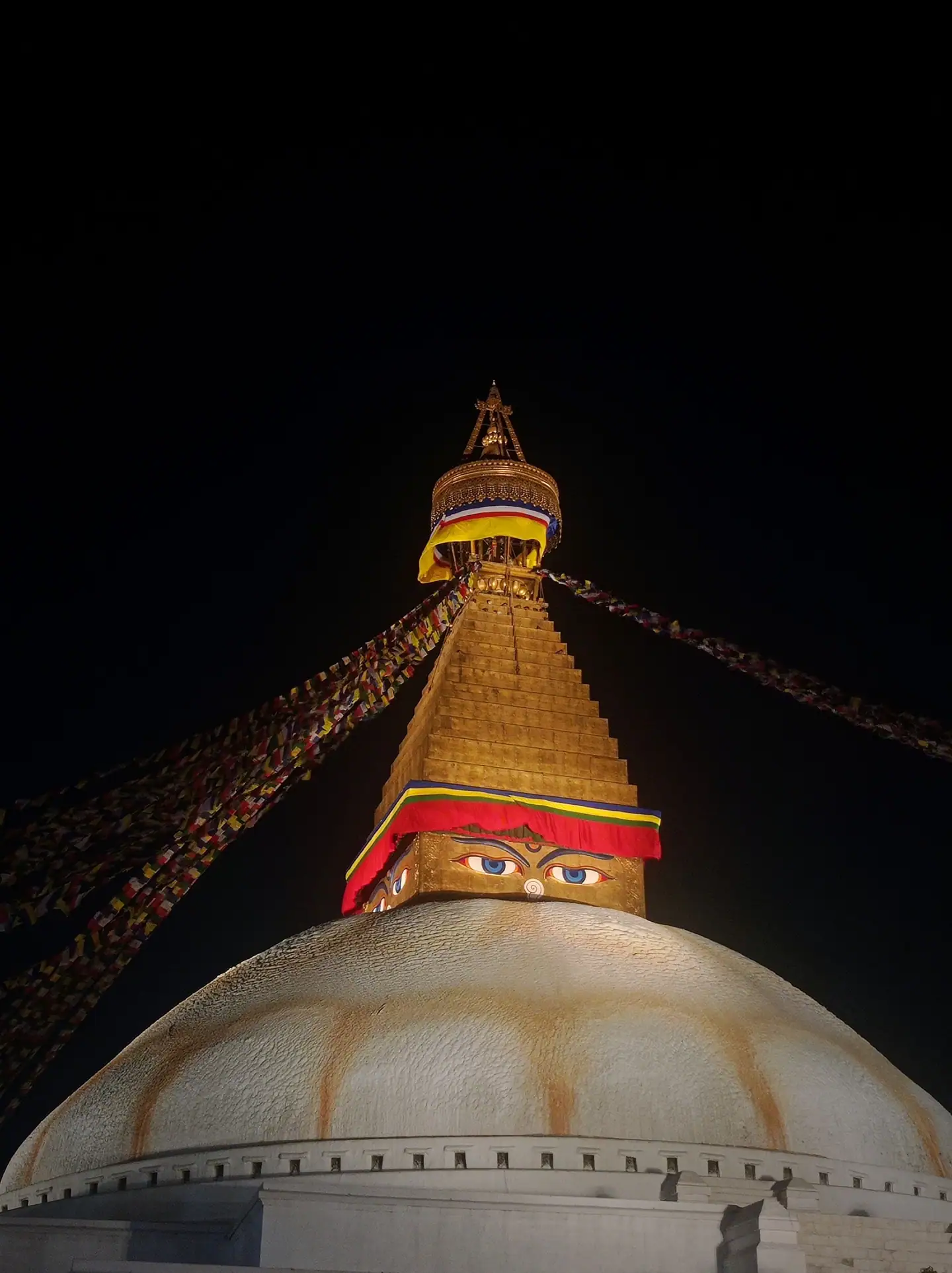
Boudhanath Stupa lit at night, its gilded tower and Buddha eyes glowing against a black sky

“Namo Buddha asks what compassion means in action.”

Before You Book

Who the Journey Suits, and What to Know

The Kathmandu Buddhist Journey suits Buddhist pilgrims, meditation practitioners and travellers who want a thoughtful introduction to Buddhist practice rather than a rushed sightseeing tour. The walking is short, every night is in the same Kathmandu hotel, and the longest drive is the day trip to Namo Buddha, about 1.5 to 2 hours each way.

Monasteries are working religious places. Monastery-led sessions, meetings with a monk or teacher, and Green Tara or Sixteen Arhats prayer observation all depend on the monastery’s permission and cannot be guaranteed until it confirms. If a ceremony is not available, your guide offers another permitted prayer observation or a guided reflection, and an early flight home can shorten the last day.

Dress modestly, follow the instructions on shoes and photography in each prayer hall, do not interrupt prayers, and never assume a monk is free to talk. The singing bowl session is a contemplative practice and is not offered as a medical treatment.

A Green Tara Puja or a Sixteen Arhats Puja can be commissioned separately. Neither has a fixed price: the cost depends on the host monastery, the length of the ceremony, the number of monks and the offerings, and Sama Yatra asks the monastery for a written quotation. Observing regular prayers, where permitted, is different from commissioning a private ceremony.

The journey runs all year on the dates your group chooses. Every place on it is below 2,000 metres, so altitude is not a concern, and the monsoon from June to September brings rain but does not stop the programme.

As of October 2026, Indian citizens need no visa for Nepal. Citizens of other SAARC countries receive up to 30 days free once in a visa year. Everyone else buys a tourist visa, which costs USD 30 for 15 days, USD 50 for 30 days or USD 125 for 90 days. Travel insurance is not included.

The journey costs USD 1,000 per person for 2 to 5 pilgrims, USD 900 for 6 to 11, USD 850 for 12 to 20 and USD 800 for 21 or more, sharing twin or double rooms. A single room costs extra, and a single pilgrim is quoted on request. A 30% deposit confirms the booking. Bookings cannot be cancelled, but the journey can be postponed for up to two years at the same cost.
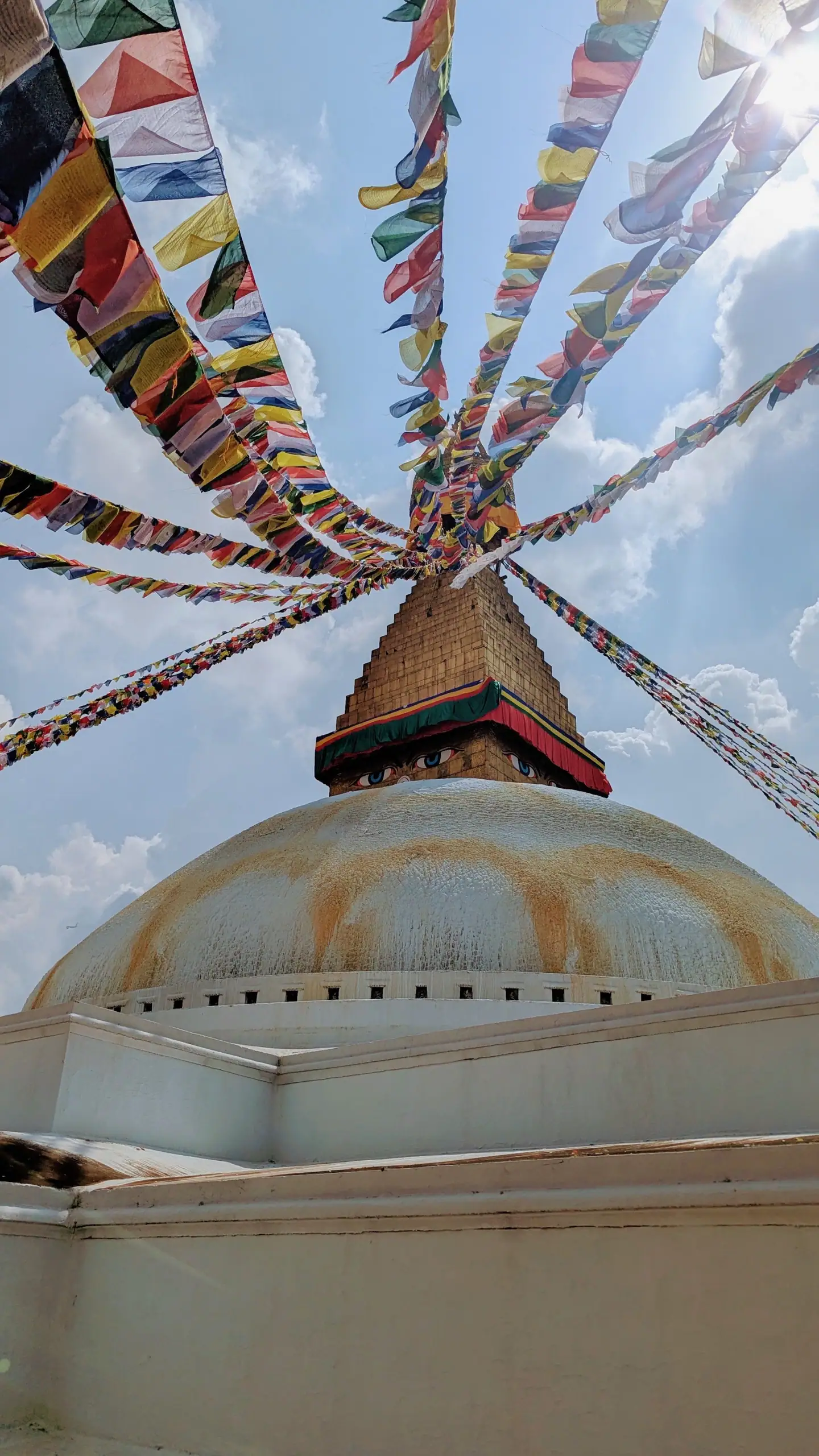
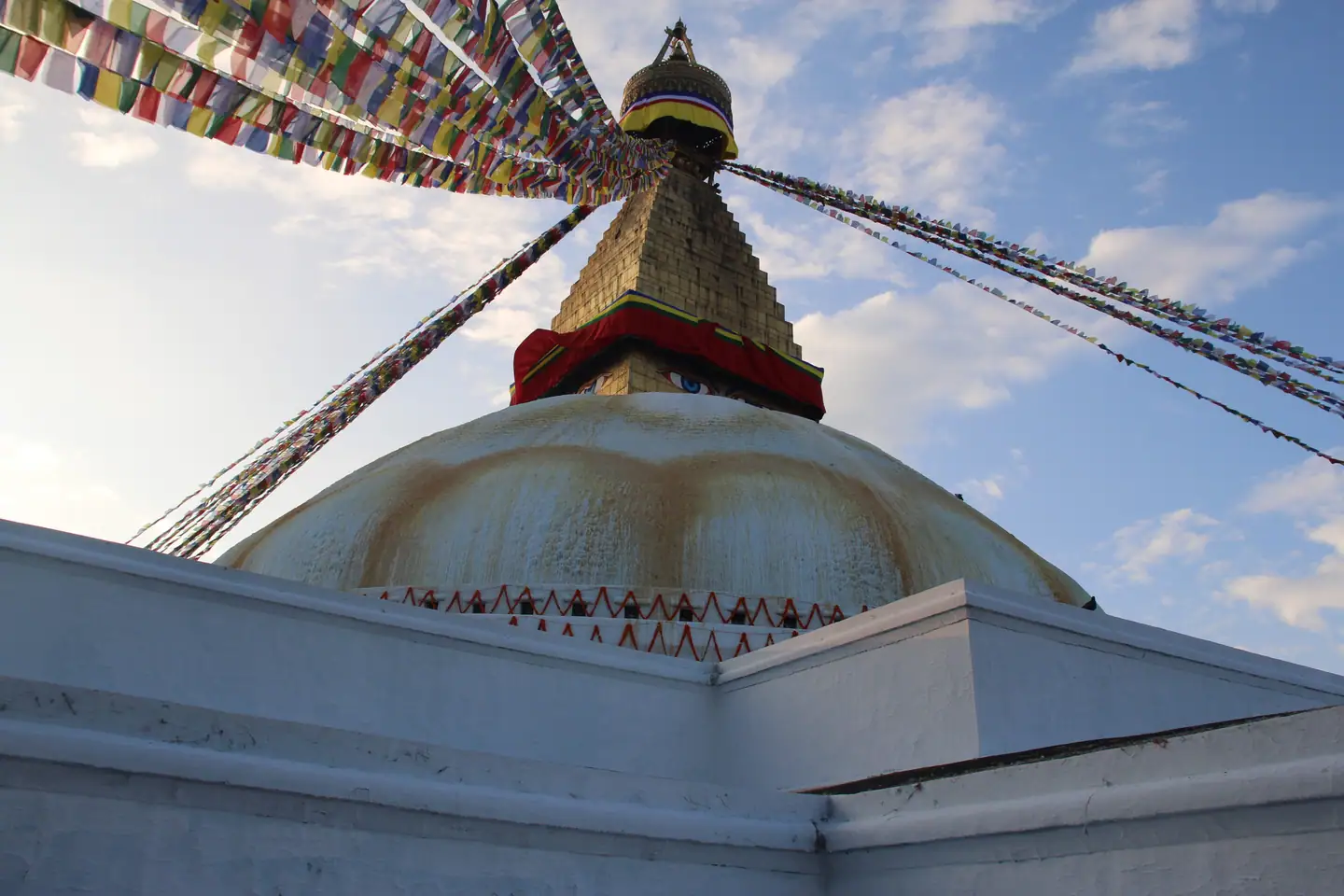
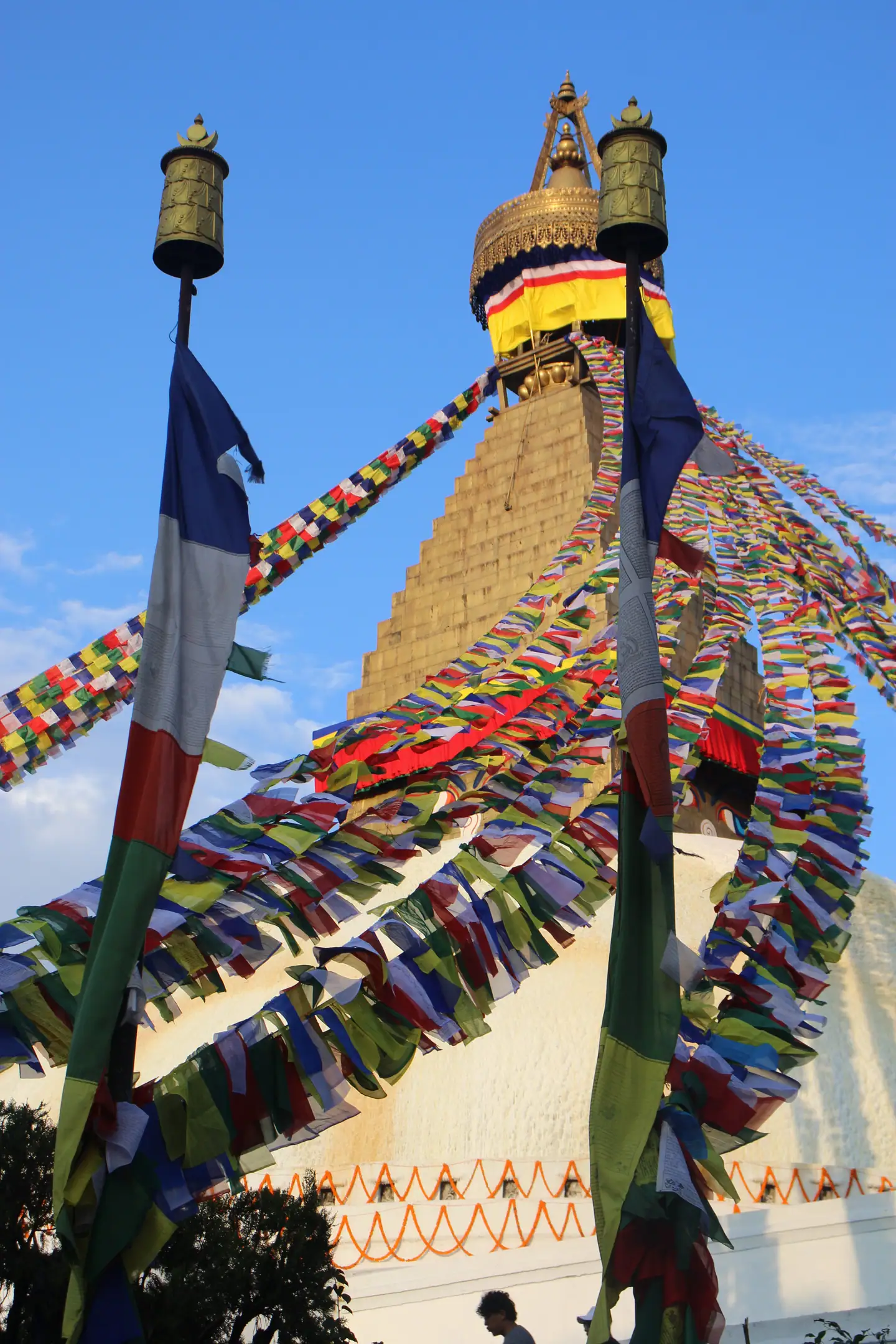
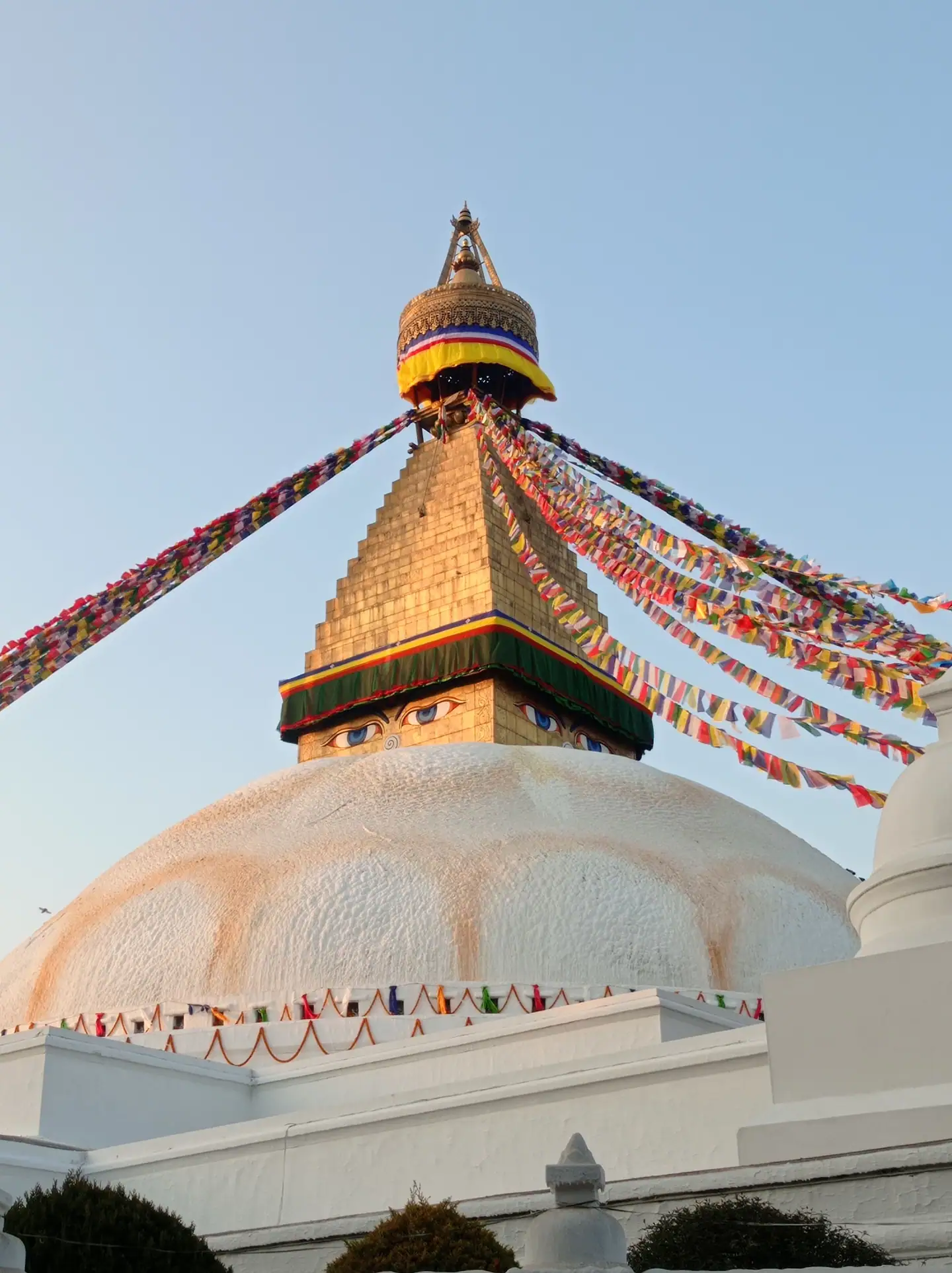
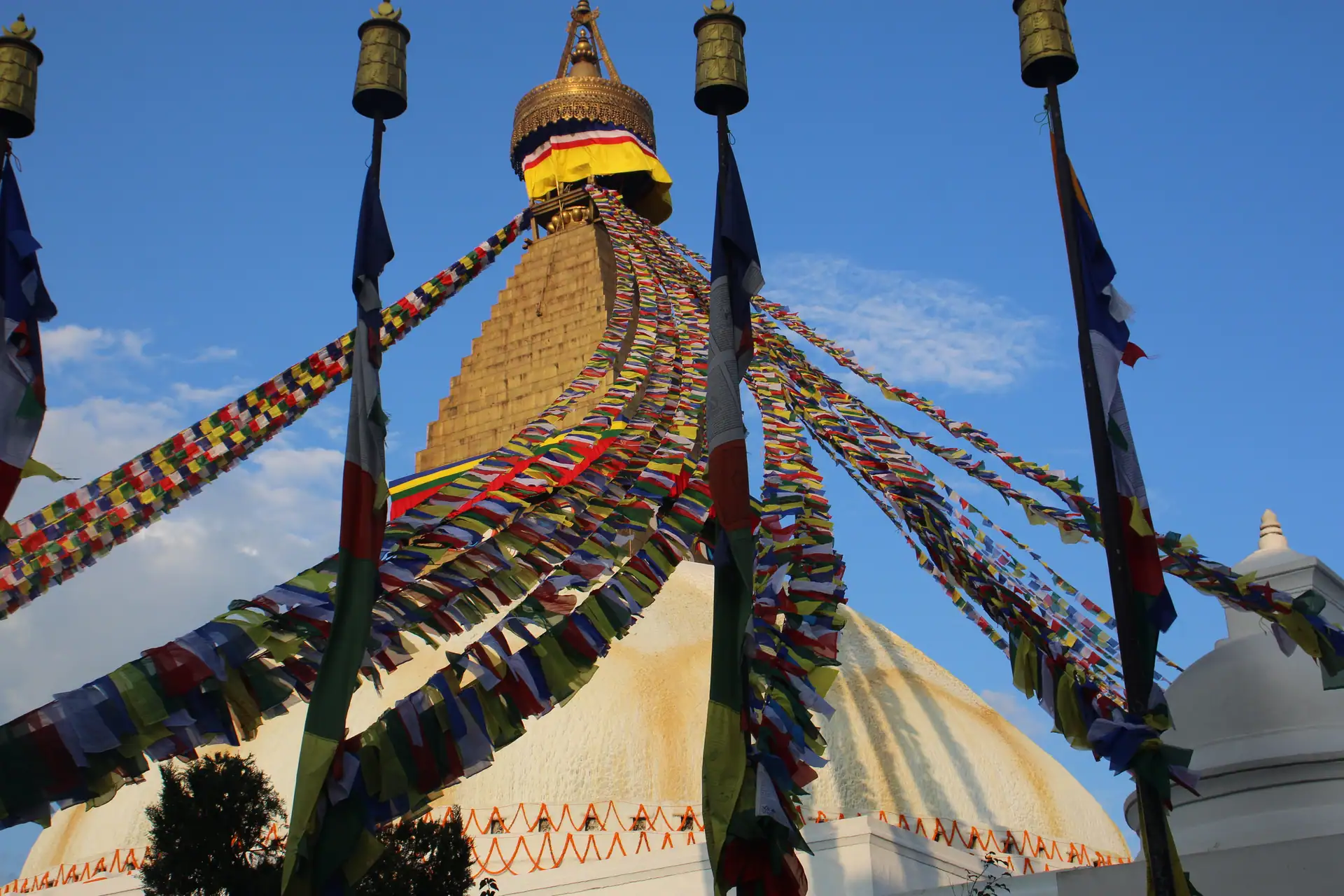
Prayer flags fanning out from the spire of Boudhanath Stupa against a bright sky, seen from the terrace below the dome

Journey Highlights

  • Swayambhunath and its prayer wheels
  • Meditation with a monk or teacher, where confirmed
  • Namo Buddha and the story of the tigress
  • Singing bowl session and meditation
  • Boudhanath in the evening

Detailed Itinerary

5 DaysKathmandu Valley and Namo Buddha

The 5 days at a glance
DayRouteOvernightTravel
Day 01Arrival and orientationKathmanduAirport pickup
Day 02Swayambhunath and monastery meditationKathmanduIn Kathmandu, Swayambhunath
Day 03A full day at Namo BuddhaKathmanduAbout 40 km by road, 1.5 to 2 hours each way
Day 04Boudhanath, singing bowls and meditationKathmanduIn Kathmandu, Boudhanath
Day 05Prayer observation and departureDepartureAirport transfer
  1. Day 01Arrival and orientation

    A Sama Yatra representative meets you at Tribhuvan International Airport and takes you by private transfer to your 3-star hotel in Kathmandu. After time to settle in, meet your English-speaking spiritual guide for an introduction to the sacred sites, Buddhist etiquette and the intention of the journey. If your arrival time allows, take a gentle walk and a short guided reflection. Lunch and dinner depending on arrival time. Overnight in Kathmandu.

  2. Day 02Swayambhunath and monastery meditation

    Visit Swayambhunath Stupa, its prayer wheels and the shrines around it, and learn about circumambulation, the Buddha’s eyes painted on the stupa, symbolic offerings and the place of the stupa in daily devotion. After lunch, visit a monastery in the Swayambhu area for an introductory session in meditation or Buddhist teaching, led by a monk or qualified teacher where confirmed in advance. The session may include mindful breathing, compassion practice and time for questions. Breakfast, lunch and dinner. Overnight in Kathmandu.

  3. Day 03A full day at Namo Buddha

    Drive about 40 km through the countryside, 1.5 to 2 hours by way of Banepa and Dhulikhel, to Namo Buddha, the stupa linked by Buddhist tradition to Prince Mahasattva and the hungry tigress. Continue to Thrangu Tashi Yangtse Monastery to learn about monastic life, reflect quietly and, if the monastery permits, observe prayers or speak with a monk or teacher. A vegetarian lunch and time for reflection, then the drive back to Kathmandu. Breakfast, lunch and dinner. Overnight in Kathmandu.

  4. Day 04Boudhanath, singing bowls and meditation

    Spend the day at Boudhanath Stupa, a centre of Tibetan Buddhist life. Watch the clockwise circumambulation, turn the prayer wheels and visit the monasteries nearby. After lunch, a guided singing bowl session with a local practitioner, followed by meditation and reflection. Return to the stupa in the evening for its devotional atmosphere. Breakfast, lunch and dinner. Overnight in Kathmandu.

  5. Day 05Prayer observation and departure

    Subject to flight times and the monastery’s permission, observe a scheduled Buddhist prayer ceremony in the Boudha area, possibly Green Tara prayers or a ceremony honouring the Sixteen Arhats, with your guide explaining the practice and how to behave as a visitor. A final reflection, lunch if your flight allows, and the transfer to the airport. Breakfast, and lunch as flight times allow.

What's Included

  • Airport pickup and departure transfer
  • Four nights in a 3-star hotel in Kathmandu, twin or double sharing
  • Breakfast, lunch and dinner as scheduled in the itinerary
  • Private transport for every listed visit, including Namo Buddha
  • English-speaking spiritual guide
  • Standard entrance fees and visitor permits for the listed sites
  • One guided introductory meditation or teaching session, subject to monastery availability
  • One guided singing bowl and meditation session
  • Coordination of monastery visits and permitted prayer observation
  • Three litres of bottled drinking water per person per day
  • Applicable taxes and service charges

What's Not Included

  • Nepal visa and international flights
  • Donations, offerings or gifts to monks and monasteries
  • Tips for the guide, driver and other staff
  • Green Tara Puja, Sixteen Arhats Puja and other separately requested rituals
  • Souvenirs and personal expenses
  • Drinks other than the stated water, including tea, coffee, soft drinks and alcohol
  • Travel insurance and medical expenses
  • Extra nights and services outside the itinerary
  • A single room

Before you book

Questions Travellers Ask

How many days do you need for the Buddhist sites of Kathmandu?

The Kathmandu Buddhist Journey takes 5 days and 4 nights: an arrival day, a day at Swayambhunath, a full day at Namo Buddha, a day at Boudhanath and a departure day with prayer observation in the Boudha area.

How much does the Kathmandu Buddhist Journey cost?

The Kathmandu Buddhist Journey costs USD 1,000 per person for 2 to 5 pilgrims, USD 900 for 6 to 11, USD 850 for 12 to 20 and USD 800 for 21 or more, sharing twin or double rooms. A single room costs extra, and a single pilgrim is quoted on request.

What is Namo Buddha?

Namo Buddha is a Buddhist pilgrimage site on a ridge in Kavrepalanchok district, Nepal. By Buddhist tradition the Buddha, in an earlier life as Prince Mahasattva, gave his body there to feed a starving tigress and her cubs. Thrangu Tashi Yangtse Monastery stands beside the old stupa.

How far is Namo Buddha from Kathmandu?

Namo Buddha is about 40 km east of Kathmandu, about 1.5 to 2 hours by road by way of Banepa and Dhulikhel, at about 1,750 metres. The Kathmandu Buddhist Journey spends a full day there and returns to Kathmandu for the night.

Can you meditate with monks in Kathmandu?

On the Kathmandu Buddhist Journey, an introductory meditation or teaching session at a monastery near Swayambhunath is included, led by a monk or qualified teacher where the monastery confirms it in advance. Meetings with monks depend on the monastery’s permission and are never guaranteed.

Do you need to be Buddhist to join?

No. The Kathmandu Buddhist Journey needs no knowledge of Buddhism and welcomes both devoted pilgrims and respectful learners. Visitors are asked to dress modestly, follow the instructions on shoes and photography, and not interrupt prayers.

Are the Green Tara Puja and Sixteen Arhats Puja included?

No. A Green Tara Puja or Sixteen Arhats Puja can be commissioned separately, and the price depends on the host monastery, the length of the ceremony, the number of monks and the offerings, so Sama Yatra asks the monastery for a written quotation. Observing regular prayers, where permitted, is part of the journey.

Is the singing bowl session a healing treatment?

No. On the Kathmandu Buddhist Journey the singing bowl session is offered as a contemplative practice with a local practitioner, followed by meditation and reflection, and is not presented as a medical treatment.

When can you do the Kathmandu Buddhist Journey?

The Kathmandu Buddhist Journey runs all year, on the dates your group chooses. The monsoon from June to September brings rain to the Kathmandu Valley but does not stop the programme.

What is included in the Kathmandu Buddhist Journey?

The price includes airport transfers, four nights in a 3-star Kathmandu hotel, meals as scheduled, private transport including to Namo Buddha, an English-speaking spiritual guide, entrance fees, a meditation session, a singing bowl session and three litres of water a day. Visas, flights, donations, separate pujas, tips and insurance are not included.

Do Indians need a visa for the Kathmandu Buddhist Journey?

No. Indian citizens need no visa for Nepal. As of October 2026 other SAARC citizens get up to 30 days free once a visa year, and everyone else pays USD 30 for 15 days, USD 50 for 30 days or USD 125 for 90 days.

What is the booking and cancellation policy for the Kathmandu Buddhist Journey?

Sama Yatra takes a 30% deposit to confirm a booking for the Kathmandu Buddhist Journey. Bookings cannot be cancelled, but the journey can be postponed for up to two years at the same cost.
Traveller Reflections

The first reflections are still being written.

We publish what travellers tell us in their own words, once they have travelled. Nothing here is borrowed or invented.

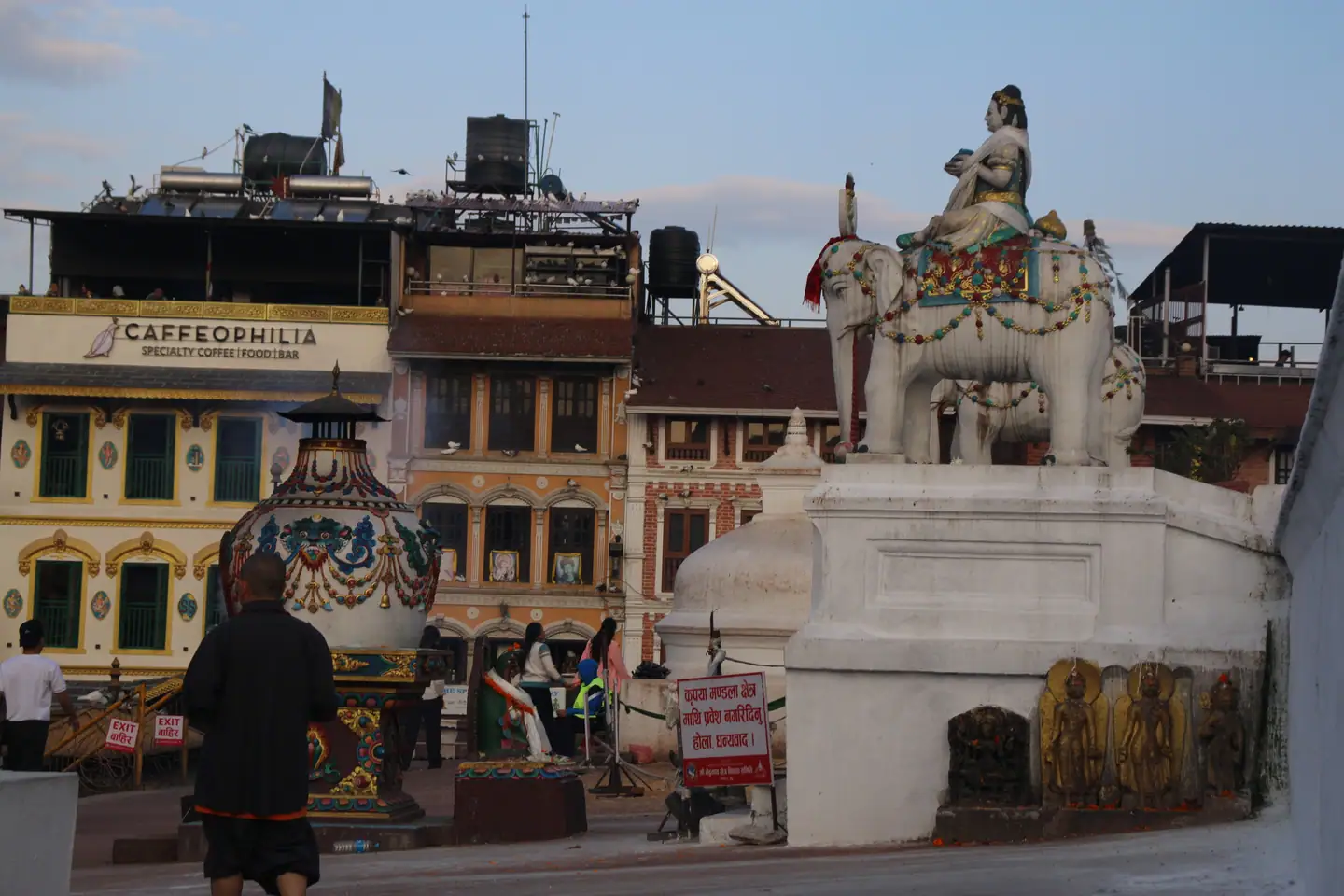
The plaza around Boudhanath Stupa in the evening, a white elephant statue carrying a seated figure on the stupa base, with a painted urn, small stupas and shop fronts behind

Swayambhunath, Namo Buddha and Boudhanath in 5 Days.Plan your Kathmandu Buddhist Journey.

Start your journey